
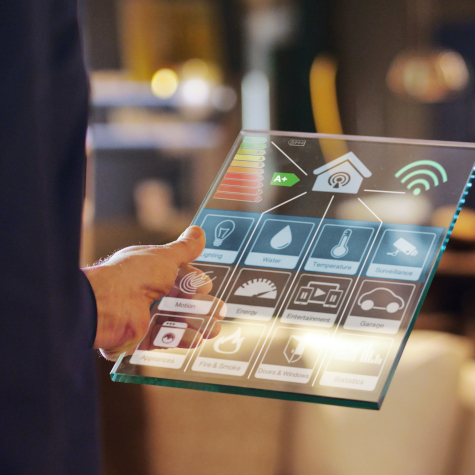
It’s 2045. Every surface, device, and system in a building is seamlessly interconnected: walls adjust insulation in response to the weather, windows tint automatically to reduce glare and heat, and AI-driven systems optimise energy use to cut waste. But this isn’t science fiction: the seeds of smart, sustainable buildings are being planted today, and property managers are at the forefront of this transformation.
The demand for both sustainable practices and smart technologies is growing across industries, and property management is no exception. Approximately 54% of contributors to the Royal Institution of Chartered Surveyors (RICS) 2024 Global Sustainability Report indicated that investor demand for green buildings in the UK had increased over the preceding year.
For property managers, this presents both an imperative to meet rising demand for eco-conscious living and working spaces, and an opportunity to drive meaningful change. In both cases, progress can be achieved by integrating intelligent systems that streamline operations and reduce resource consumption, and implementing eco-friendly practices that lower emissions and boost asset value.
Read on to explore how the property industry is evolving to meet these demands, from the rise of smart buildings to the implementation of sustainable strategies, and the expanding role of property managers in shaping a sustainable future for the property industry.
The Rise of Smart Buildings
Smart buildings leverage technologies like the Internet of Things (IoT), artificial intelligence (AI), and automation to optimise operations and reduce resource consumption. These buildings use interconnected systems to monitor and manage energy use, water consumption, HVAC systems, and security in real time.
Integrating smart technologies into a building enables property managers to make data-driven decisions based on real-time information, enhancing efficiency and reducing environmental impact. Automated systems take this one step further, allowing AI to optimise conditions to a specified set of parameters without the property manager’s input.
Advanced energy management systems can detect patterns in energy use and adjust lighting, heating, and cooling systems accordingly, reducing waste and lowering costs. Predictive maintenance systems can identify potential equipment malfunctions before they occur, minimising downtime and preventing costly repairs. Additionally, automated security systems, including surveillance cameras and access control, can enhance building safety while reducing human intervention.
Smart Buildings in Action
Smart buildings are no longer a futuristic concept. They’re a present-day reality, already transforming the property management landscape. Around the world, cutting-edge properties are integrating emerging technologies to deliver impressive energy savings, improved comfort, and enhanced operational efficiency.
One compelling example of smart building implementation is The Edge in Amsterdam. Dubbed the world’s smartest building, it employs 28,000 sensors to monitor occupancy, lighting, temperature, and air quality. This data-driven approach has resulted in a 70% reduction in energy use compared to traditional office buildings.
Similarly, smart systems in properties like Hudson Yards in New York and Marina One in Singapore have demonstrated how intelligent infrastructure can drive efficiency, safety and sustainability. These real-world examples prove that smart building innovations are practical, scalable, and ready to be adopted on a broader scale.
Benefits for Property Managers
Smart buildings provide property managers with real-time monitoring and automation, streamlining maintenance and cutting operational costs. IoT sensors and AI systems enable early detection of equipment issues, reducing emergency repairs and extending asset lifespans. With less need for manual oversight, managers can shift focus from routine tasks to strategic priorities like tenant engagement, sustainability initiatives, and performance optimisation through data analysis.
Smart technologies also enhance communication with tenants via integrated platforms, improving responsiveness and satisfaction. Automated compliance monitoring ensures buildings meet regulations and green standards efficiently. Additionally, the ability to connect with wider smart city systems allows property managers to align their operations with broader urban sustainability goals.
The Future of Energy-Efficient Buildings
Over the next two decades, the focus on energy efficiency will likely intensify in the UK. This year alone, the government has announced a £630 million investment to upgrade public buildings with energy-efficient technologies like solar panels and heat pumps. Meanwhile, recent reforms to the Energy Performance of Buildings regime focus on improving the quality and applicability of energy certificates, updating EPC metrics, and strengthening compliance protocols.
In response, developers like Barratt are committing to building new homes that meet Passivhaus standards, offering superior energy efficiency and sustainability. These passive buildings, which rely on natural heating and cooling systems, are expected to become more common. Meanwhile, net-zero buildings, designed to produce as much energy as they consume, will also gain prominence, driven by stricter regulations and growing environmental awareness.
AI-powered systems will play a critical role in optimising energy use. Advanced analytics can predict peak usage times, enabling property managers to implement dynamic energy management strategies. For instance, AI algorithms can adjust HVAC settings based on real-time occupancy data, preventing energy waste in unoccupied areas.
Additionally, the rise of microgrids and energy storage systems will allow buildings to generate and store power, reducing dependency on the main grid. This self-sufficiency lowers energy costs and provides a backup power source during grid outages, ensuring operational continuity.
As battery technology advances, energy storage systems will become more compact, efficient, and affordable. This will enable property managers to store surplus solar or wind energy for later use, reducing reliance on fossil fuels.
The integration of vehicle-to-grid (V2G) technology also presents new opportunities. Electric vehicles (EVs) can act as mobile energy storage units, feeding electricity back to the building or grid during peak demand periods. Property managers managing EV charging stations will find this capability useful for optimising energy flows and reducing costs.
Building materials and design will also evolve. Innovations like phase-change materials (PCMs), which absorb and release thermal energy, and green roofs and walls that provide insulation and improve air quality, will become commonplace features.
The future of sustainable buildings will be shaped by both transformative innovations and practical, immediate actions. Over the next two decades, advances in AI, net-zero construction, and self-sustaining energy systems will redefine what it means to be energy efficient. Yet property managers don’t have to wait for these big shifts to make an impact. Small changes like installing smart thermostats, optimising waste management, and sourcing sustainable materials can start driving positive outcomes today.
Sustainable Practices in Property Management
Property management is well-positioned to lead the charge toward a more sustainable future. According to the International Energy Agency, buildings account for nearly 30% of global energy consumption, highlighting the urgency for energy-efficient upgrades and resource optimisation.
By implementing targeted retrofits, sustainable landscaping, and waste reduction strategies, property managers can cut energy consumption and operating costs while increasing long-term property value and compliance.
Energy Efficiency Upgrades and Retrofitting
Retrofitting existing buildings with energy-efficient systems is a significant step toward sustainable property management. Energy audits can help identify inefficiencies, enabling property managers to prioritise upgrades such as LED lighting, smart thermostats, and energy-efficient appliances. Additionally, installing insulation and double-glazed windows can minimise heat loss, reducing overall energy consumption. Solar panels, wind turbines, and geothermal systems can further decrease a building’s carbon footprint, offering long-term savings and environmental benefits.
Certifications and Compliance
Achieving green certifications like LEED, BREEAM, and Energy Star not only demonstrates a commitment to sustainability but also enhances property marketability to eco-conscious tenants. These certifications can result in reduced operating costs, offsetting initial investment costs. Additionally, with more councils mandating energy performance disclosures, maintaining compliance with green standards has become an essential aspect of sustainable property management.
Waste and Water Management
Implementing waste management initiatives such as composting and recycling helps minimise landfill contributions while reducing disposal costs. Smart waste management systems allow property managers to monitor waste levels and schedule pickups more efficiently. For water conservation, smart water systems can track consumption, detect leaks, and adjust irrigation based on weather data. Properties can also benefit from grey water recycling systems that repurpose water from sinks, showers, and washing machines for irrigation and toilet flushing.
Sustainable Landscaping
Implementing sustainable landscaping practices conserves water and reduces overall maintenance costs. Roof gardening and green walls can improve air quality and provide natural insulation, lowering energy consumption. The use of native plants is another sustainable strategy, as these species require less water and are more resistant to local pests, reducing the need for chemical treatments. Additionally, rainwater harvesting systems can collect and store precipitation for non-potable uses like irrigation, easing the strain on municipal water supplies.
Procurement and Materials Management
Sustainable procurement prioritises environmentally friendly materials and products. Opting for energy-efficient appliances and fixtures reduces resource consumption and aligns with green certification requirements. Long-term procurement strategies can also include partnering with suppliers committed to sustainable manufacturing and waste reduction, reinforcing the property’s overall commitment to environmental responsibility.
The Evolving Role of Property Managers
Smart technology and sustainable practices are reshaping the roles of property managers. Traditional responsibilities, such as routine maintenance and tenant communication, are increasingly augmented by data-driven insights and tech-enabled solutions. Instead of working reactively, property managers will need to develop new skills, including data analysis, tech proficiency, and sustainability literacy.
Proactive Management
Predictive Maintenance: With AI-powered predictive analytics, property managers can forecast when equipment or systems are likely to fail, allowing for timely servicing that prevents costly breakdowns and operational disruptions.
Optimised Scheduling: Smart data enables precise scheduling of maintenance tasks based on actual usage and condition rather than fixed intervals, improving efficiency and reducing unnecessary work.
Tenant Insights: Historical data analysis helps predict tenant preferences and behaviours, allowing managers to tailor services, anticipate needs, and enhance overall tenant satisfaction.
Sustainability Advocacy
Bridging Stakeholders: Property managers act as liaisons between building owners, tenants, and technology providers, ensuring smooth adoption of sustainable technologies and practices. Property managers must skillfully balance upfront costs with potential incentives and future savings, guiding owners through financially sound decisions.
Education and Culture Building: By educating tenants and owners on the environmental and financial benefits of sustainability, property managers foster a culture of responsibility and engagement within the community. Transparent discussions with tenants about changes and benefits will encourage cooperation and participation in sustainability efforts.
Driving Green Initiatives: Managers champion initiatives such as waste reduction, energy conservation, and water efficiency, helping to embed sustainability into daily operations.
Navigating Regulations and Incentives
Compliance Management: As governments tighten environmental regulations, property managers ensure buildings meet evolving standards, avoiding penalties and legal risks.
Maximising Incentives: Managers will need to identify and apply for grants, rebates, and tax incentives designed to support green building upgrades, reducing financial burdens on owners.
Policy Advocacy: Property managers may also contribute feedback to policymakers, helping shape regulations that are practical and effective for the industry.
Conclusion
By embracing smart technologies and sustainable practices, property managers can optimise operations, reduce environmental impact, and meet the growing demand for eco-conscious living spaces.
The role of property managers is evolving along with buildings themselves, requiring greater technical proficiency and renewed sustainability advocacy. Property managers have the chance to step up as leaders in the sustainability movement, driving positive change and encouraging landlords and tenants alike to adopt new technologies and sustainable behaviours. As smart systems become more widespread and green building standards become more stringent, those who adapt and innovate will be best positioned for success in the years to come.
Ultimately, the transition to smarter, more sustainable property management is not a trend but a necessity in the face of escalating climate challenges. Those who seize the opportunity to integrate smart systems and sustainable practices early will not only future-proof their properties but also contribute to a healthier, more resilient planet.